
The Flip: Jorge Tameron brings his Cuban Heritage to St. Barnabas Day!
A Conversation with Our Senior Warden -Jorge Tameron
This Sunday, our Senior Warden and his family are bringing a beloved piece of Cuban culinary heritage to our St. Barnabas Day celebration — a traditional whole pig roast. I sat down with him to talk about food, family, and what it means to share a tradition with the people you love.
What was the food culture like in your home growing up? Were big meals a central part of family life?
Dinner was usually a big and heavy meal. Rice was always a staple — plain white rice served with beans. This pairing is a staple in Cuban and many Hispanic and Latino cultures. It was, and still is, my favorite food. I remember that my grandmother would even make rice as a side when making complete dishes like lasagna. And I remember many times sneaking into the kitchen to swipe some rice from the rice cooker before dinner without my grandmother noticing! The biggest meals, however, were the family gatherings. I was fortunate to be raised by my grandparents, so I would witness my grandmother and her sisters gather in the kitchen to make rice, beans, salads, stews, desserts, and numerous other things, while my grandfather and the uncles took care of the protein.
In Cuban culture, what occasions call for roasting a pig — is it tied to holidays, celebrations, family gatherings?
Roasting a pig was left for the largest gatherings, the staple being Noche Buena — Christmas Eve. However, any gathering that commemorated something special could warrant roasting a pig: significant birthday parties, graduations, big sport games, block parties. If the gatherings were smaller, we would roast a pork shoulder — specifically a pork picnic shoulder. Many of the supermarkets in Miami roast the picnic shoulder themselves for purchase, in volumes that rival the rotisserie chicken at Costco!
Are there any rituals or traditions your grandparents had around the roast — a certain way to prepare it, prayers, who gets to do what?
This question brought a smile to my face. There are a few.
Preparing the pig for roasting was a ceremony by itself — it would begin the day before. My grandmother and her sisters would prepare the marinade while my grandfather or one of my uncles would pick up the pig. In the farmland of Miami, there are farms where you could order the pig and they wait to process it until you arrive — quite the experience, if you can imagine. As soon as you arrived with the pig, it would be prepared to fit in the roasting box and marinated. Then we would place it in a large plastic bag and store it overnight in a large cooler or bathtub, with bags of ice over it.
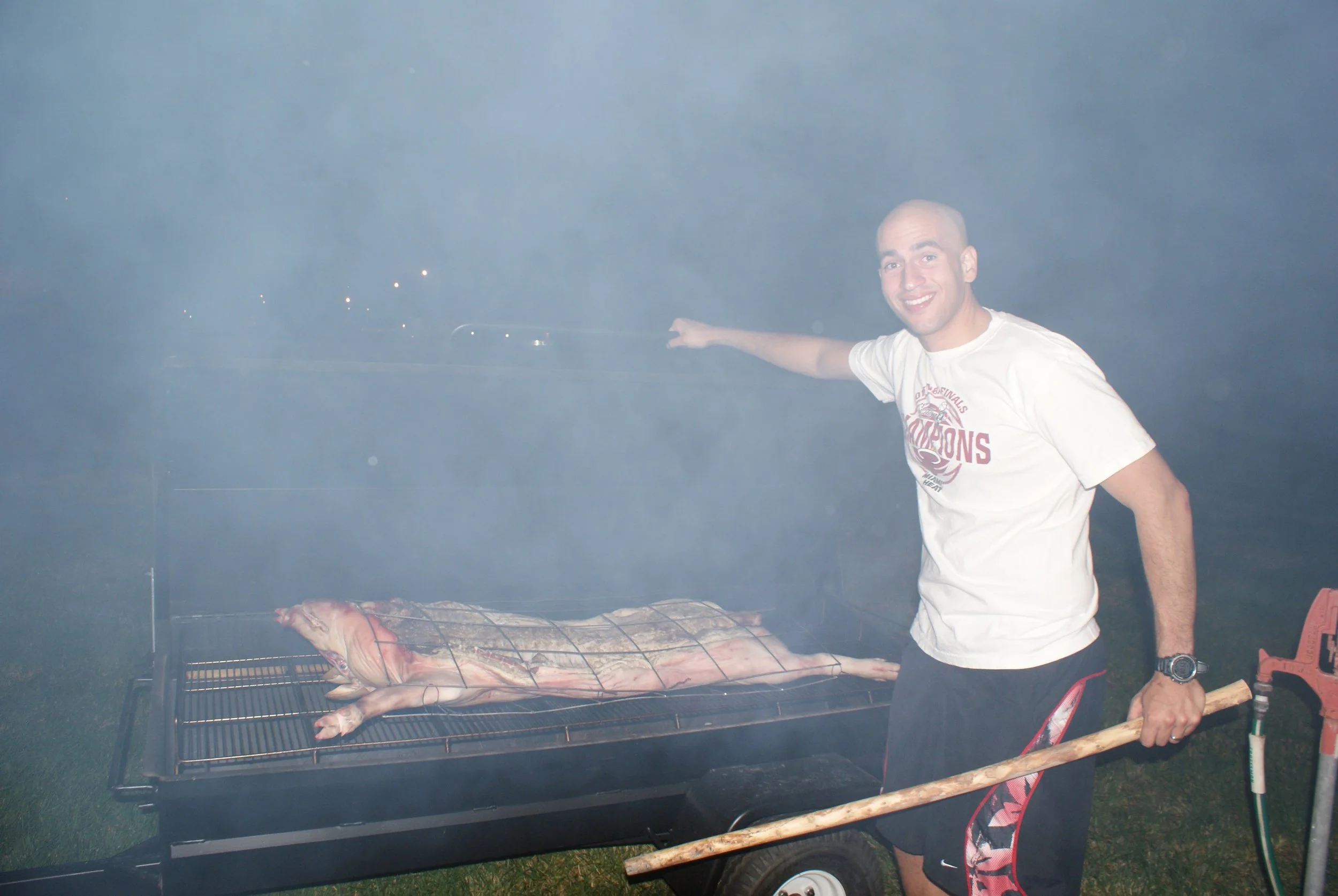
To roast the pig is a 6–8 hour process. Once the timer starts, someone checks every hour to ensure the temperature is right, adding more charcoal if needed, scooping ash off the top of the roasting box so it doesn't insulate the heat. During that monitoring time, dominoes would be played, conversations had, and memories made.
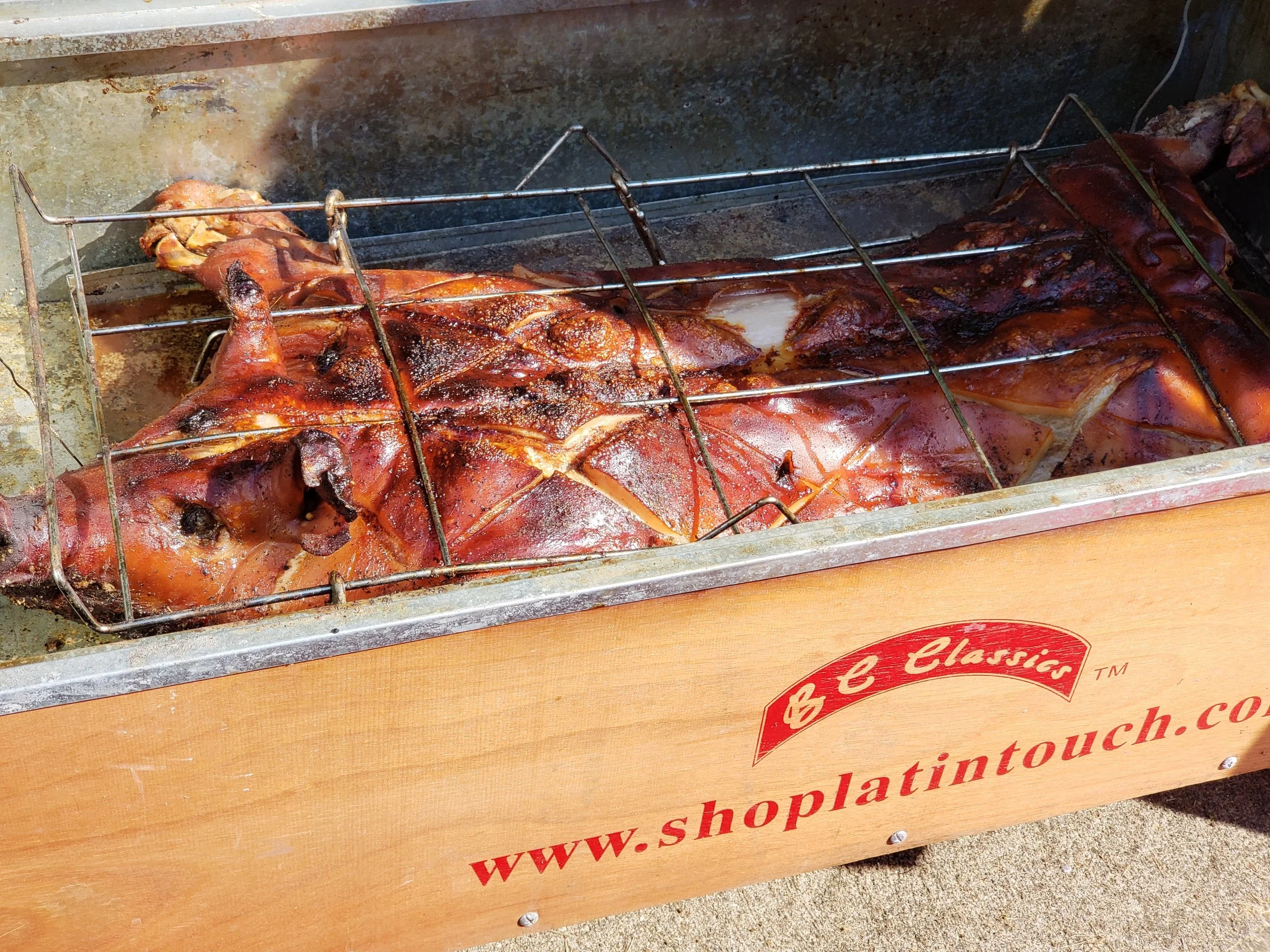
Then comes The Flip — the first big event. When the pig is placed in the roaster it is skin-side down. About an hour before serving, the box is opened to flip the pig skin-side up so the skin can crisp. Everyone gathers around for the flip to see the main course, since not everyone is at the gathering when the pig first goes in the box.
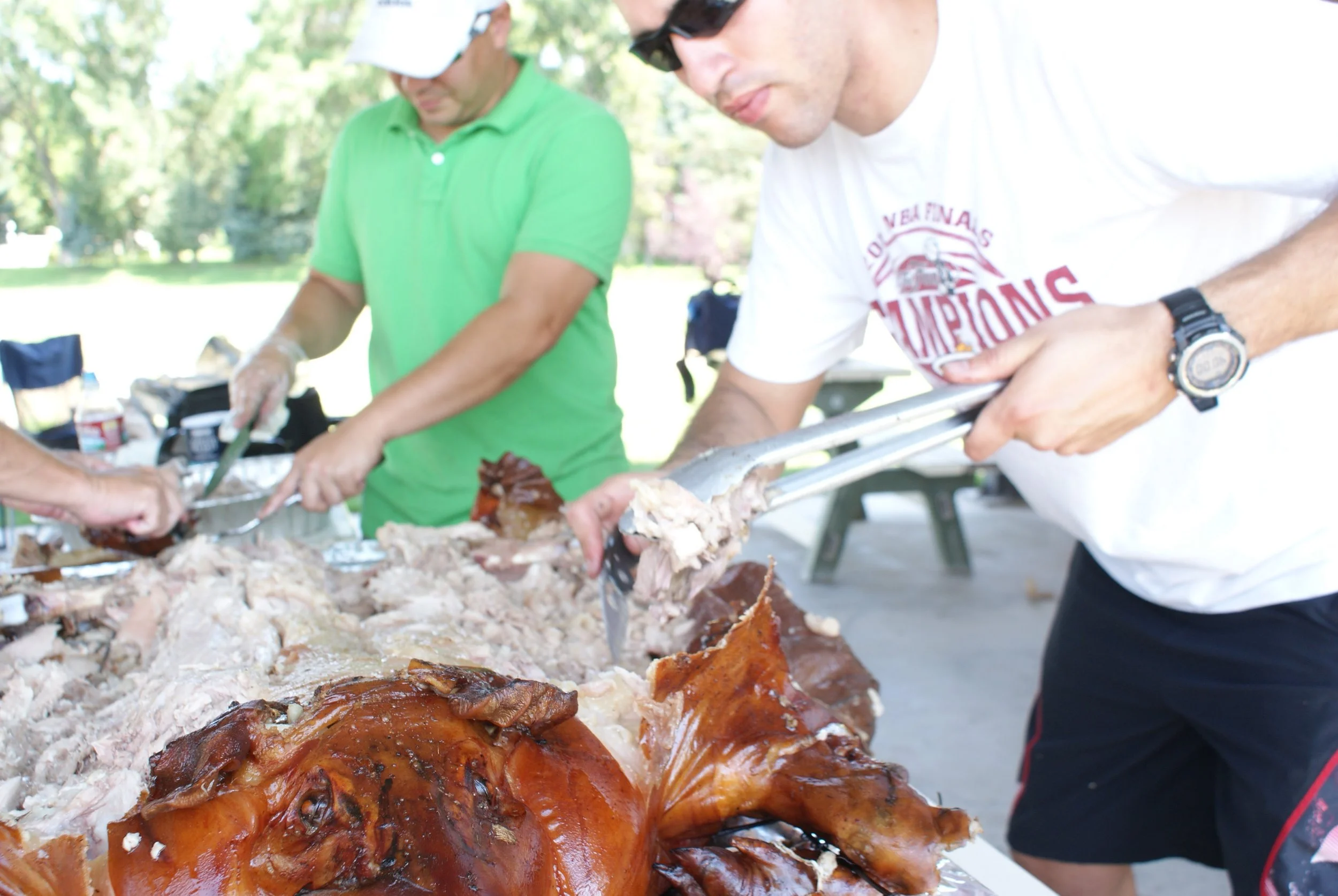
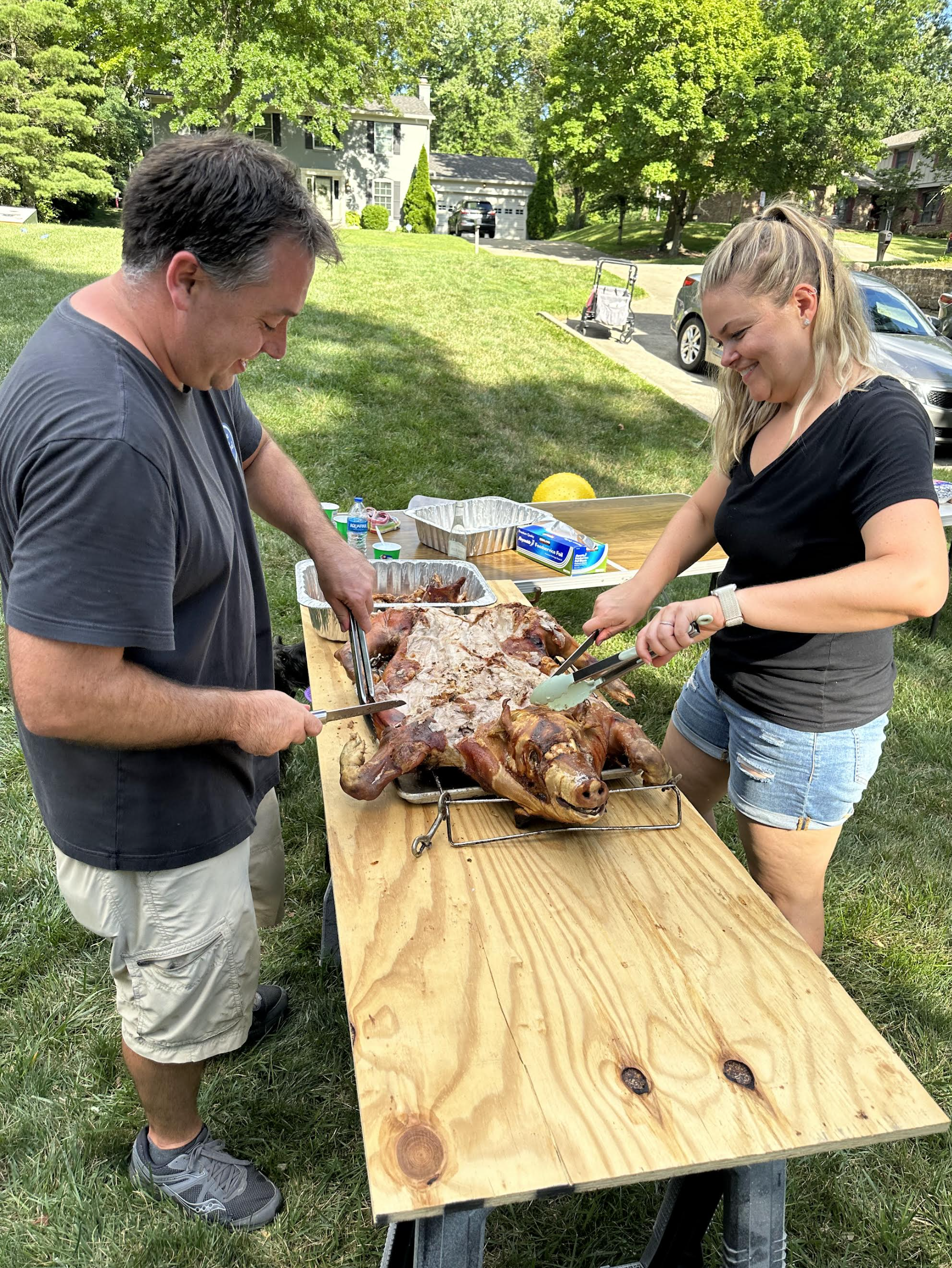
About an hour after The Flip is showtime — The Reveal. The fully cooked pig is removed from the roasting box and placed on a serving surface, and it's all hands on deck to collect the roasted pork onto serving dishes. But before that happens, there is always a rush for the crispy skin. And then there were always some of the elders — my grandmother and her sisters — bartering with each other over the less desirable parts, such as the ears, eyes, and snout.
How did you first come to use a La Caja China, and what does the name mean?
La Caja China is a brand — the first company out of Miami to commercialize this type of roasting box — so the name has come to be used casually for all roasting boxes of this type. The literal translation is "The Chinese Box." I believe the name stems from Cuban immigrants in Miami who witnessed, while living in Cuba, the methods Chinese laborers used to cook food while on the island. While there are now commercial boxes available — such as the one we'll be using for our St. Barnabas Day picnic — traditional approaches used whatever materials were on hand: cinder blocks, chain-linked fencing, fence posts, aluminum siding.
For Jorge, this particular box carries its own history: it was a gift from his grandparents when he completed his master's degree.
Make it stand out
What's the moment during the cook that you love most — is there a smell, a sound, a sight that tells you it's going right?
The Flip. It's always the Flip. You get proof that it's not burnt or undercooked — don't worry, it's been over a decade since that has happened to me! — everyone gathers, and we know that very soon we'll be able to enjoy the meal together.
This Sunday, The Flip, will happen around 9:30 near the office door, so come, gather and share in the tradition.
What does it mean to you to bring this tradition to St. Barnabas?
I love to share my culture and my life experiences with those I care about, especially now that I'm living in the Midwest. This is in part because so many people shared with me as I grew up. With the success of the capital campaign and our good fortunes with the land acquisition, there is much to celebrate as a church family for St. Barnabas Day 2026.
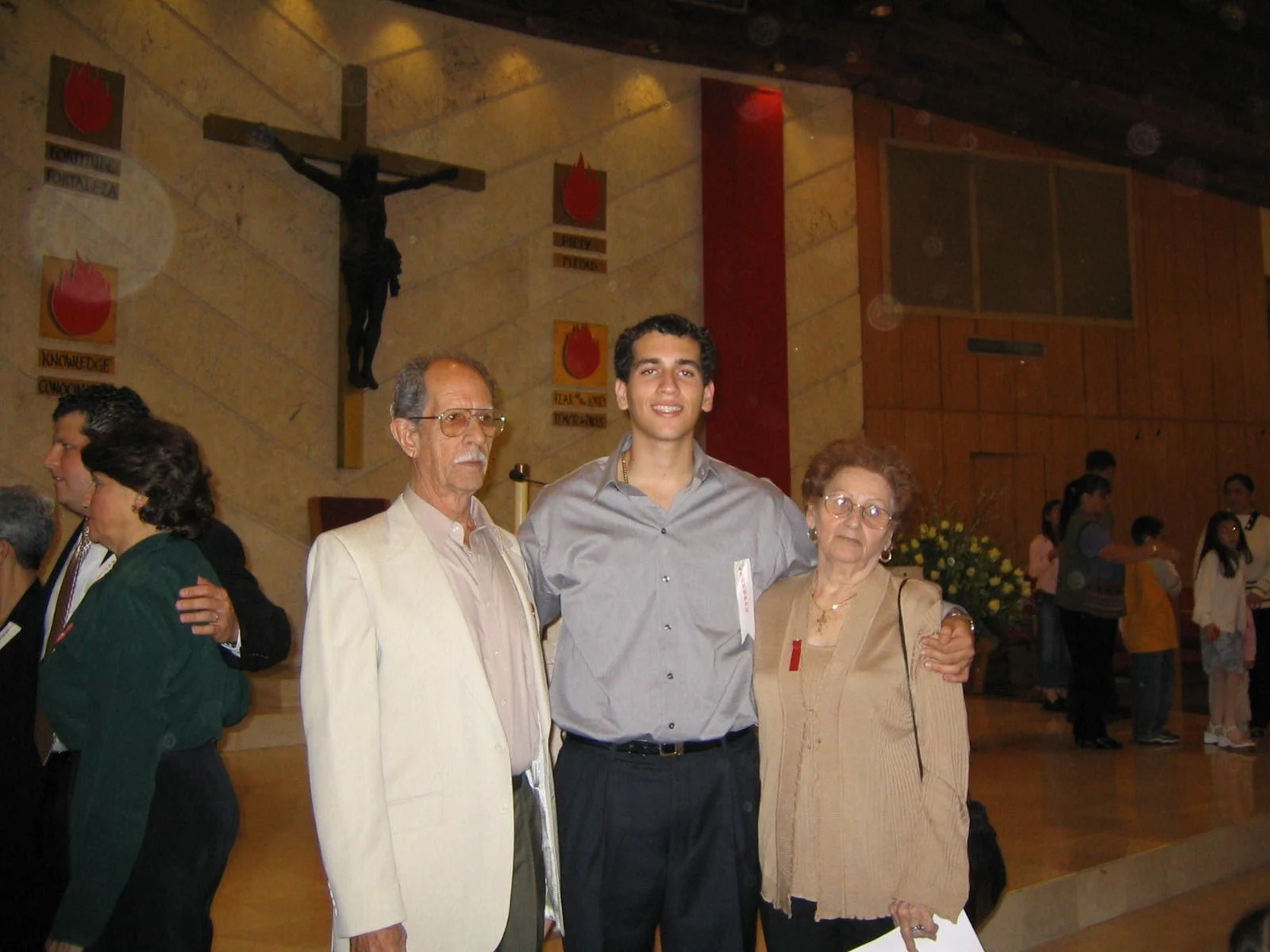
If your grandparents could see you roasting this pig for your church family today, what do you think they would say?
They would be proud of the sharing of our culture, our St. Barnabas community, and the person I have grown to be with their guidance. My grandmother would have insisted on making the marinade. My grandfather would have been by my side every step of the roast.
Join us for St. Barnabas Day this Sunday, rain or shine! In addition to the roasted pig, we will also have vegetarian options available. All are welcome at the table.